CCS’s Fashion Accessories Design Program Turns 10
If someone asked me to move to Detroit while I was living in Florence, Italy, I’d probably say no, too.
Renowned Finnish footwear designer and brand owner Aki Choklat was living “a very good life” in one of the world’s most beautiful cities when he received a call in 2015 from a headhunting agency. The designer — who used his experience to teach and establish programs at famous fashion schools in Europe, like Italy’s Polimoda — was enjoying his terrace views of the Florentine rooftops and cypress trees and living in an area rich with luxury manufacturing. So when the headhunter told him about a job in Detroit, it was only natural he’d say, “No, I’m OK. Thanks.”
That night, he flew to London, where he owned a second home, and met with a friend at a pub, telling him about “this weird call from the U.S.” But after his friend told him that the Motor City was “super hot — like, everybody is talking about Detroit,” Choklat decided he should give them a call back.
He met with the agency at its London-based office, which featured a strange setup of a single table and chair. There, a recruiter surprised Choklat with three words that would change his life forever: “You’re the one.”
She explained that the College for Creative Studies would be launching a fashion accessories design program — and wanted him to lead it.
After visiting the CCS campus on a beautiful sunny day in April and being told he would have free rein of the facilities and the empty department space, Choklat accepted the job, honored to take on this new challenge.
He sold his home in London and kept his place in Florence for the summers, and by the following September, he was appointed chair of CCS’s new fashion accessories design program.
Over the past 10 years, Choklat and those on the program’s advisory council, which currently includes prominent figures in the fashion industry such as Millie Aoki de La Valette, head of creative talent acquisition at Louis Vuitton; Tracy Reese, founder of Hope for Flowers; and Diane Mahady, president and CEO of Hermès for the Americas, have worked together to develop a curriculum where students can network with brands like Calvin Klein and Bottega Veneta and turn what they’ve drawn on paper into real and marketable items.
A lot of the time, people end up moving out of state to receive that type of education and exposure. Bloomfield Hills native Josie Teachout thought she’d have to go to the Rhode Island School of Design or the School of the Art Institute of Chicago. However, prior to her graduation in 2016 from Detroit Country Day School, she attended a CCS senior fashion show.
“My mom always reminds me that I got in the car after and I cried because I didn’t realize how awesome CCS was and how great all of the students’ work was,” Teachout says. “I had always kind of dismissed it as being just too local.”
Teachout, who graduated from CCS with a BFA in fashion accessories design and a minor in fine arts in 2021, is now an accessories atelier apprentice at Calvin Klein in New York City. There, she works with the atelier director to develop accessory prototypes, a process that includes pattern making, sample building, material sourcing, and more. She says having a sponsored studio with Calvin Klein at CCS “definitely helped open the doors” and that the hands-on experience of creating items with industrial sewing machines — like shoes and purses — prepared her to take on the position she is in now.

Ava Kaloustian, a footwear design associate at Tory Burch who also graduated from CCS’s fashion program in 2021, says her love of working with her hands landed her an internship at Shinola her freshman year. She had some help securing the internship from a professor, who worked at Shinola’s prototyping studio. Later, she’d also get internships at Calvin Klein and Ralph Lauren thanks to Choklat’s industry connections.
“He’s so great at advocating for us, and he always speaks highly of his students,” Kaloustian says, adding that Choklat was constantly traveling to obtain partnerships and interview opportunities for his students.
One of her favorite things about being at CCS during the fashion program’s early years is how small the classes were (the current class size maximum is 15). “I still talk to everyone.”

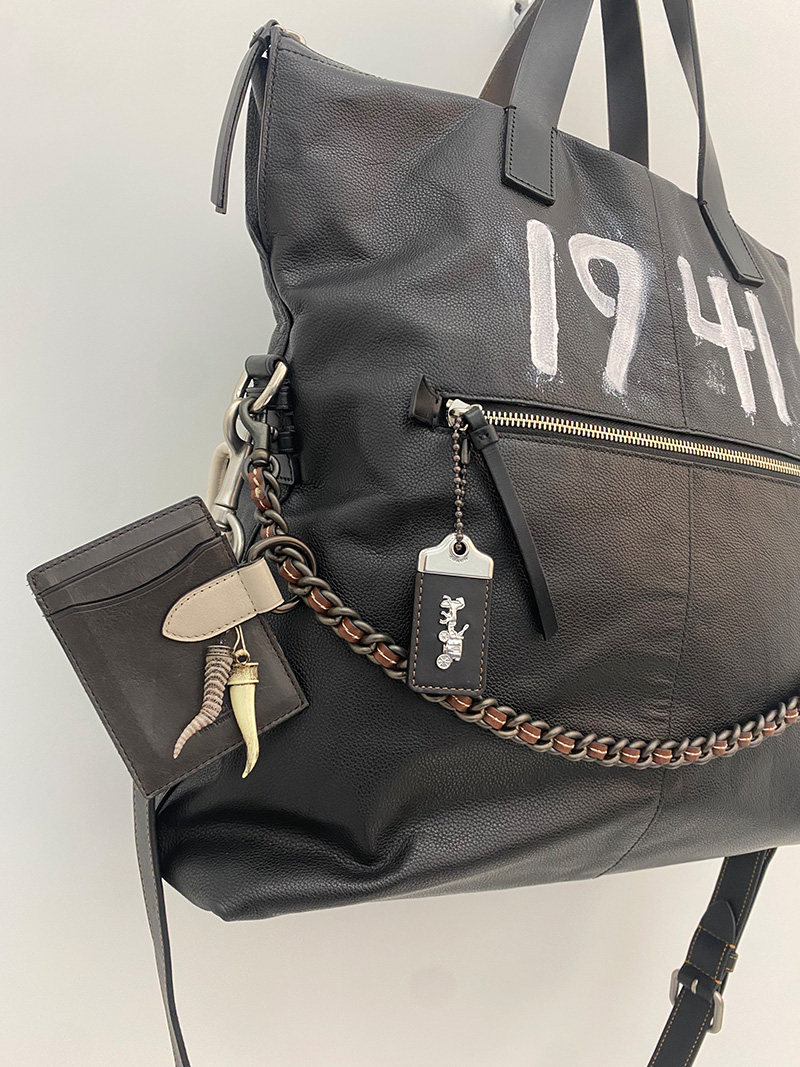
And Jacob Emmett, who just finished an apprenticeship with Coach, says since graduating in 2023 from the program, he’s noticed that others in the industry who graduated around the same time from different schools didn’t share the same learning experiences, especially when it comes to hands-on experience and training.
“They just focused on the design aspect of the business,” says Emmett. “Whereas [at] CCS, they just really throw you all in and teach you how to make it.”

Since founding the accessories program 10 years ago, CCS has expanded the department to add apparel design to the curriculum in 2022 and recently applied for 2026 accreditation for a bachelor’s degree in fashion business management, which would make CCS the only fashion school in North America to have a three-year bachelor’s degree that equates to 90 credits.
The college has also expanded educational opportunities out of state to the High School of Fashion Industries in New York, creating programming that allows students to transfer credits to CCS. At the fashion-district-based school, students are taught the curriculum by the high school’s instructors and attend specialized fashion accessories design workshops led by Choklat.
“We work hard teaching high school students, and then we are able to bring them to our precollege program,” Choklat says. “A lot of these students come from poverty or below poverty, and a lot of them have not had any experience to travel.”
Tapestry, which owns Coach and Kate Spade, sponsored about five of those students who attended CCS’s precollege summer program this year.
This three-week for-credit program, for which 90% of the students reside on campus, is also available to local high school students. After choosing a concentration (fashion design is one of them), students learn from professionals who help them pinpoint their interests and strengths and create a portfolio.

As technology continues to evolve in the fashion industry, CCS has also partnered with the Industrial Sewing and Innovation Center, a Detroit-based nonprofit organization, to provide students with access to a 3D knitting machine.
When asked if he believes he has achieved his goals for the program, Choklat says without hesitation, “Absolutely.”
“I have created an amazing utopian playground for fashion footwear, accessories, and design, where students can really explore their fullest potential with all the investment we have in technology,” he says. “I’m really lucky we have the ability to purchase machinery and create this fantastic laboratory where we can just experiment and make things.”
This story originally appeared in the September 2025 issue of Hour Detroit magazine. To read more, pick up a copy of Hour Detroit at a local retail outlet. Click here to get our digital edition.
link